
How To Target High-Value B2B Accounts With Email Lookup Tools?

How To Target High-Value B2B Accounts With Email Lookup Tools

In B2B marketing, reaching high value-accounts isn’t about trying to contact as many people as possible. 

Instead, it’s about finding the specific individuals who can truly influence decisions in the company, you know-the decision-makers, and crafting messages that feel relevant to them. 

Email look up tools like GetEmail.io can help marketers do this by allowing them to identify and directly reach those key decision-makers and influencers, rather than sending out impersonal, broad emails that often get ignored.

When used strategically, these tools let marketers go beyond “cold” outreach, making connections that feel personal and intentional. 

This way, each message can be tailored to match the recipient’s role and needs, helping to build interest and trust right from the start. 

The goal isn’t just to get a response but to create a meaningful relationship with the people who actually impact purchasing decisions. 

In this blog, we’ll explore how to use email lookup tools such as GetEmail.io to build connections that lead to lasting, valuable partnership with high-value accounts.

Reach the Real Decision-makers Network, Not Just Executives

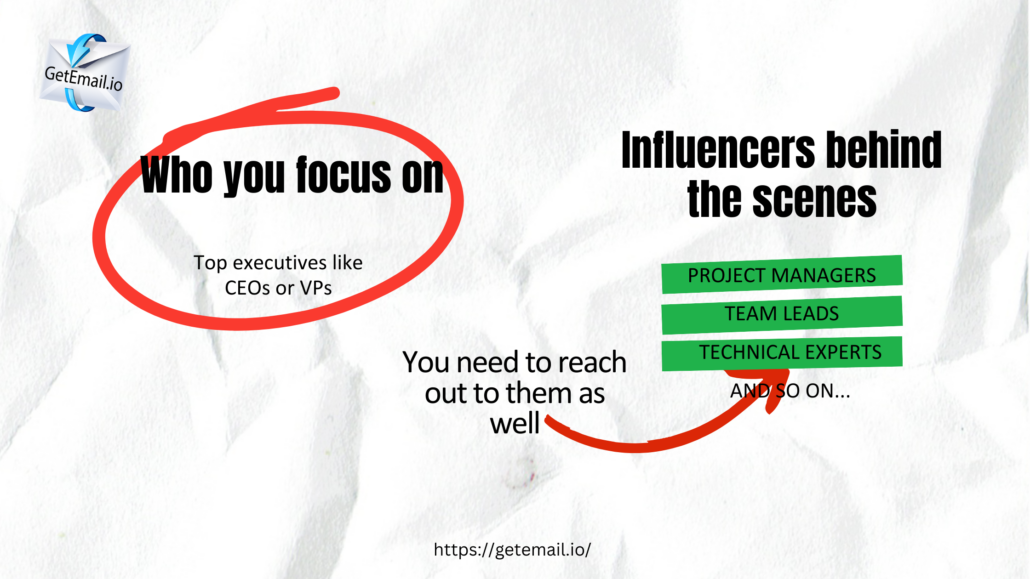
When targeting high-value accounts, it’s common to focus on top executives like CEOs or VPs.

But in reality, the decision-making process in these companies often involves a broader network of people who influence the final choice.

This network includes project managers, team leads, and technical experts who may not have executive titles but play a key role in deciding which solutions the company adopts. These are the “influencers behind the scenes.”
Reach the Real Decision Network, Not Just Executives

Using B2B email tools, you can identify and connect with these influential contacts, not just the top executives. For instance, GetEmail.io makes the B2B lead generation hassle-free. 

With such an AI based tools it’s easy to find the emails of project leads, department managers, or other strategic voices who directly contribute to the buying decision.

Building relationships with these people means you have allies who can advocate for your solution when the decision reaches higher levels.

For example, a project manager who sees the value of your product can bring it up in team discussions and push for it internally.

This approach is effective because B2B buying is rarely a solo decision. Many departments and roles contribute to the final choice.

By engaging a range of contacts early on, you build trust within the company, making it more likely that executives will view your solution as credible and well-supported.

In short, reaching the full decision network strengthens your chances of winning high-value accounts.

Micro-Segment Accounts to Address Specific Needs - The Perfect Sales Targeting approach

Every high-value account is unique, with its own specific goals and challenges.

Some companies might be focused on rapid growth, while others are more concerned with cutting costs or staying ahead with innovation.

Because of this, a one-size-fits-all message won’t resonate. Instead, it’s important to segment or group your target accounts based on their main priorities and tailor your outreach to fit those specific needs.

For instance, start by grouping accounts based on their strategic goals—whether it’s growth, innovation, or cost-effectiveness. If a company is growth-focused, highlight how your solution can scale with them and support that growth.

On the other hand, if you’re reaching out to a company that prioritizes technology, emphasize the advanced features and innovation your product brings.
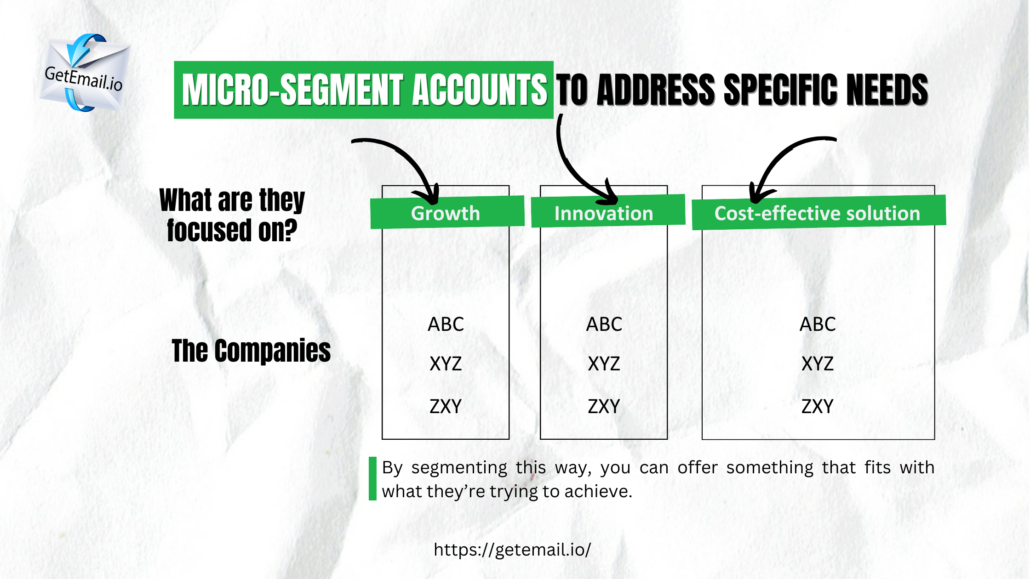
Micro-Segment Accounts to Address Specific Needs

This approach of sales targeting works well because high-value accounts are looking for partners who understand their vision.

Tailoring your messages to align with their unique objectives shows that you’re not just offering a generic solution; you’re offering something that fits with what they’re trying to achieve.

In this way, each message feels more relevant, helping you build stronger, more meaningful connections.

Time Your Outreach to Align with Business Changes

Timing plays a huge role in B2B outreach success. 

When you reach out to a high-value account at a moment of change—like during a merger, a new leadership hire, or an expansion—you increase the relevance of your message. 

This is because organizations often reconsider their strategies and explore new solutions during transitions.
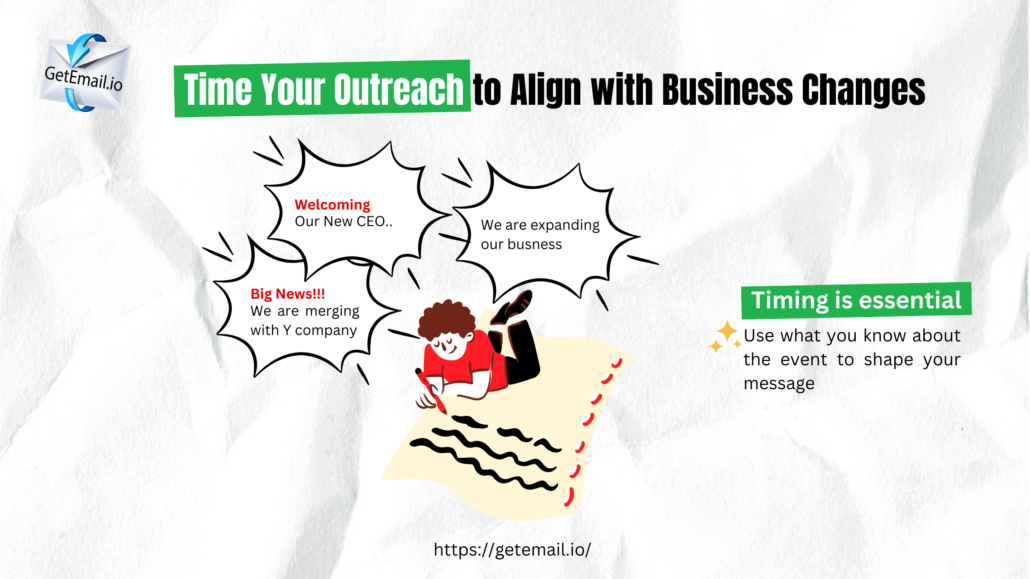
By timing your outreach to align with these shifts, you position yourself as a responsive, timely partner.

Monitor for Trigger Events

These “trigger events” signal a period of change and potential need. Keeping an eye on news related to your target accounts (like announcements of mergers, leadership changes, or big industry shifts) helps you spot these moments. 

For example, a merger might mean the company needs solutions to integrate new systems, or a leadership change might indicate a new direction or priorities.

Frame Your Message with Context

Use what you know about the event to shape your message. For example, if a company just expanded, it’s likely focusing on scalability and integration. 

In this case, you might frame your product as a scalable solution that can support their growth smoothly and efficiently. This way, your outreach feels tailored and addresses their specific, timely needs.

And when it comes to finding the email address, you have GetEmail.io! Just draft the appropriate message that aligns with the recent event of their organisation and hit send. You are all done!

Why does this work? 

Timing is essential because it makes your message feel highly relevant and specific to their current situation. 

Prospects are more likely to pay attention to solutions that speak directly to challenges they’re facing now, making your outreach more impactful and likely to resonate.

Build Familiarity Before Reaching Out

Let’s face it—cold emails can be easy to ignore. 

When you’re reaching out to someone for the first time, they’re more likely to respond if they already recognize your name. 

Warming up your contacts beforehand creates that familiarity and makes your outreach feel less like a random sales pitch and more like a natural connection.
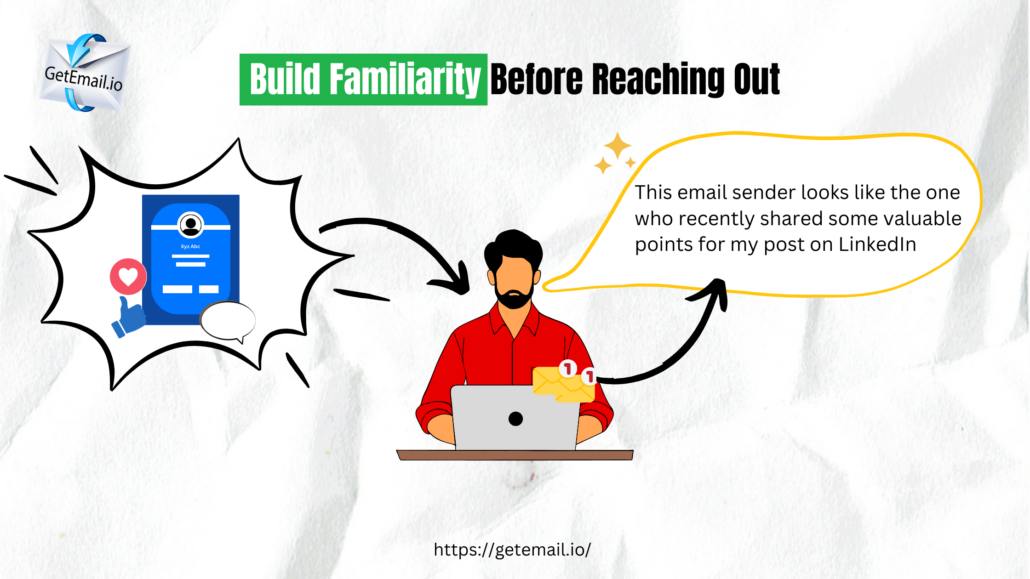
Build Familiarity Before Reaching Out

Start by Engaging on Social Media

One of the easiest ways to get on someone’s radar is through social media. Connect with your target contacts on LinkedIn and start engaging with their posts. 

You don’t need to go overboard—a like here, a thoughtful comment there. 

That’s totally enough!

These small interactions make your name familiar, so when your email eventually lands in their inbox, they already know who you are.

Share Useful Content

Another way to build familiarity is by sharing content that actually matters to them. 

Think of industry insights, reports, or case studies that speak to their specific interests or challenges. 

With B2B email tools like GetEmail.io, you can identify the professional email addresses of the right people for this content. 

Refer to image below – it shows how efficiently you can locate the email addresses of people associated with any company using our popup extension.
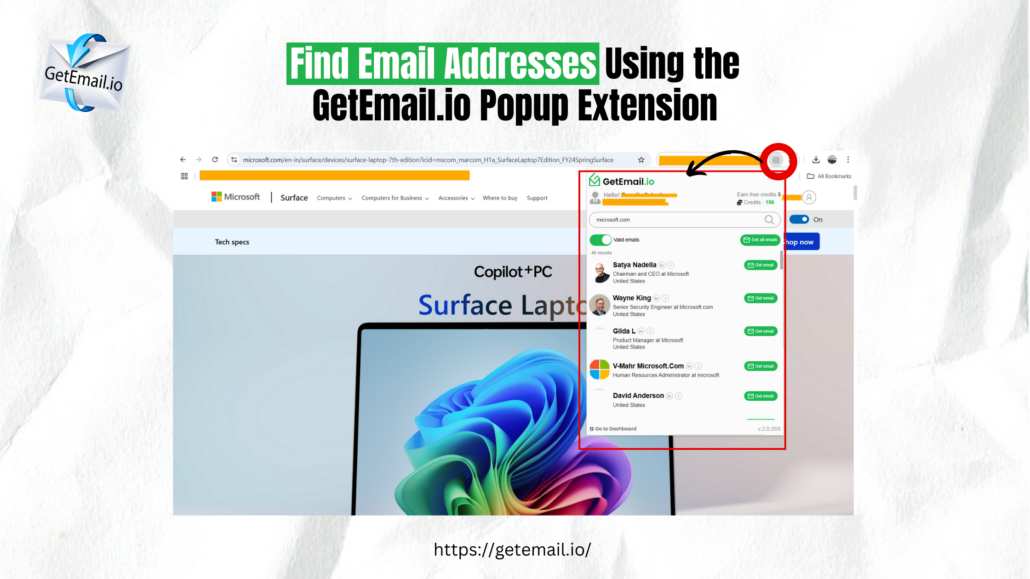
Find Email Addresses Using the GetEmail.io Popup Extension

This way, you’re showing up as someone helpful and knowledgeable—not just another person pushing a product.

As you may know, familiarity makes people comfortable. 

When you’ve already interacted with them in small ways, your email doesn’t feel like it’s coming out of nowhere. 

Instead, it feels like a continuation of the conversation, making them much more likely to open and engage with what you’re saying.

Track Engagement to Refine Your Approach

Track Engagement to Refine Your Approach

High-value accounts are rarely won with just one email—it’s usually a gradual process. 

Tracking how your contacts engage with your outreach can reveal valuable insights, helping you see what’s working and where you might need to adjust. 

This way, you can fine-tune each interaction to make it more relevant and effective.

Identify What’s Resonating

By keeping an eye on open rates, clicks, and responses, you start noticing patterns. 

For example, if emails focused on cost savings or scalability are getting the most clicks, it’s a signal that these topics are important to your contacts. 

You can then focus more on these areas in future messages, ensuring that your outreach speaks to what matters most to them.

Organize Contacts by Engagement Level

Not everyone engages in the same way, so grouping your contacts based on their level of interest can help you target them better. For example:

High-engagement contacts (those who frequently open and click) are likely ready for a deeper conversation. Inviting them to a demo or a call could be the next step.

Lower-engagement contacts might benefit from more subtle follow-ups, like sharing helpful resources or industry insights to keep them interested without overwhelming them.

This approach keeps your outreach dynamic and responsive, making each contact feel like you’re genuinely listening and adapting. 

Instead of a blanket approach, you’re refining your strategy based on real-time feedback, which makes your messaging more personal and increases your chances of meaningful engagement.

Provide Continuous Value Beyond the Initial Email

High-value accounts often make decisions over time, so it’s essential to establish yourself as a trusted partner through ongoing value. 

Rather than pushing for an immediate sale, focus on building a long-term relationship by sharing useful insights and staying on their radar.

Send Regular, Relevant Updates

Share updates that align with their goals—like industry news, new case studies, or product features that support their objectives. 

For example, if they’re interested in growth, you might share content on scaling strategies or case studies that show how your product supports expansion. 

These updates show you’re tuned into their needs and keep your solution relevant.

Highlight Success Stories and ROI

Show them how similar companies have benefited from your solution, giving them a concrete sense of the value you deliver. 

Real examples of cost savings or productivity gains reinforce your credibility and demonstrate that your solution drives results.

This steady, value-driven approach builds the kind of trust that high-value accounts look for in long-term partners. 

By sharing meaningful information consistently, you position yourself as a reliable resource they can turn to when they’re ready to make a decision.

Concluding Thoughts

With the use of GetEmail.io to target high-value B2B accounts you can transform your outreach from broad cold emails to intentional, impactful connections. 

By reaching beyond executives to engage the full decision network, tailoring messages to fit each account’s priorities, and timing outreach around key changes, you set the stage for meaningful relationships. 

This approach isn’t just about getting a response—it’s about building trust and establishing yourself as a valuable partner, setting the foundation for lasting success with high-value accounts.
Better Your Professional Network with LinkedIn Email Finder Tool

Email finder tools for your professional networking

When you think of expanding your professional network, establish industry connections or discover new career opportunities, the only name that pops first in the mind is LinkedIn!

It’s a one-stop-shop for all your career related needs. You find top-tier professionals to connect to, mentors with vast experiences giving career advice and industry peers to learn what’s trending.

However, there’s one challenge – it is the gap between LinkedIn connection and direct communication. The users have limited chances to send messages to their target connection.

How can one bridge this?

The most ideal way is through emails. This is where LinkedIn email finder tools come into play, streamlining the process of finding professional email addresses and unlocking new possibilities of outreach.

In this article, we’ll look into how LinkedIn email finder tools have become a game-changer for professional networking. Let’s also discuss their benefits, how they work, best practices for using them, and the ethical considerations you need to keep in mind when using.

What are LinkedIn Email Finder Tools?

What are LinkedIn email finder tools?

LinkedIn email finder tools are software or browser extensions that allow users to extract email addresses from LinkedIn profiles. These tools help professionals find verified and accurate contact details, facilitating direct communication with people they are connected to—or even those outside their network.

There are two types of LinkedIn email finder tools:

  1. In-Platform Tools – These tools integrate with LinkedIn and provide email addresses directly within the platform.
  2. Third-Party Tools – These operate independently of LinkedIn and may search for email addresses across multiple online sources, including LinkedIn, to provide accurate contact details.

Do you know? 3 out of 4 people on LinkedIn drive business decisions. So, utilizing email finder tools can really come handy.

While LinkedIn offers its own messaging feature, which is great for communication within the platform, email finder tools help professionals move conversations beyond LinkedIn. Emails tend to be more effective for follow-ups, professional pitches, and formal proposals.

GetEmail.io – The Perfect Email Finder Tool for You

From finding email addresses to validating them, helping you create unique lists of LinkedIn and streamlining your outreach, GetEmail.io does everything and more!

The LinkedIn extension is always helpful not just in finding the email addresses of your potential lead, but it also shows the hierarchy of the organization.

Now, doesn’t it become easy to find the right connection to add to your network? It does, indeed.

Another interesting aspect is that you can this entire process down to few minutes by installing our integration with Make & Zapier.

Benefits of Using LinkedIn Email Finder Tools for Professional Networking

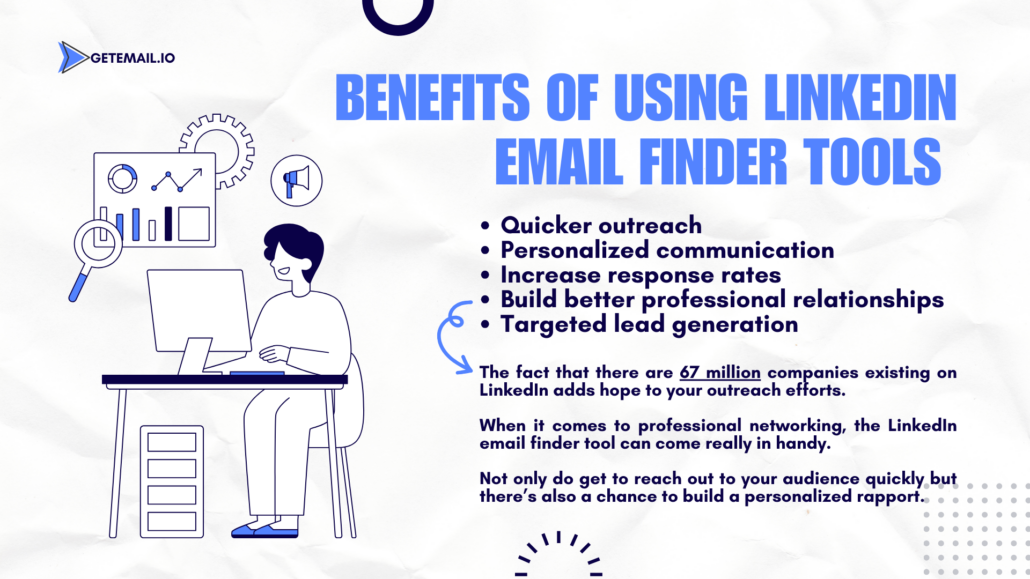
There are 67 million companies on LinkedIn. Of course, the number itself adds advantage for you to network better. However, this also mean that utilizing the right email finder tool can boost those benefits. Let’s learn how it benefits:

Benefits of using LinkedIn email finder tools

1. Quicker Outreach

One of the key advantages of LinkedIn email finders is the ability to speed up the outreach process. Sending LinkedIn connection requests or messaging through the platform’s managing system becomes less efficient, if not time consuming. Extract email addresses and reach out immediately. This not only saves times, but you also don’t have to worry if the recipient regularly checks their LinkedIn inbox or not!

2. Personalize Your Say

Email have always been the most efficient tool for professional communication. You access a more formal and direct channel compared to LinkedIn messages, which can often be ignored or lost in the noise. Leverage email search tools to personalize the outreach better. You can send tailored messages that resonates with the recipient’s specific interest.

3. Increase Response Rates

Most marketers report an average email open rate of 46 – 50%! With personalized, direct emails, response rates tend to be much higher than those achieved via LinkedIn messages. Most professionals are more likely to engage with an email that is tailored specifically to them rather than generic outreach through social media platforms.

4. Build Better Relationships

Using email finders to connect with professionals via email allows for stronger relationship building. While LinkedIn is great for making the initial connection, following up with personalized emails establishes a more direct line of communication. It, then becomes easier for to nurture relationships, exchange ideas, or offer solutions relevant to their challenges.

5. Targeted Lead Generation

For sales professionals and marketers, LinkedIn email finders are a crucial tool for generating targeted leads. These tools enable them to identify and reach decision-makers or key contacts in the industry, making lead generation much more effective. Once the email address is obtained, a carefully crafted email campaign can be launched.

How Does LinkedIn Email Finder Tool Work?

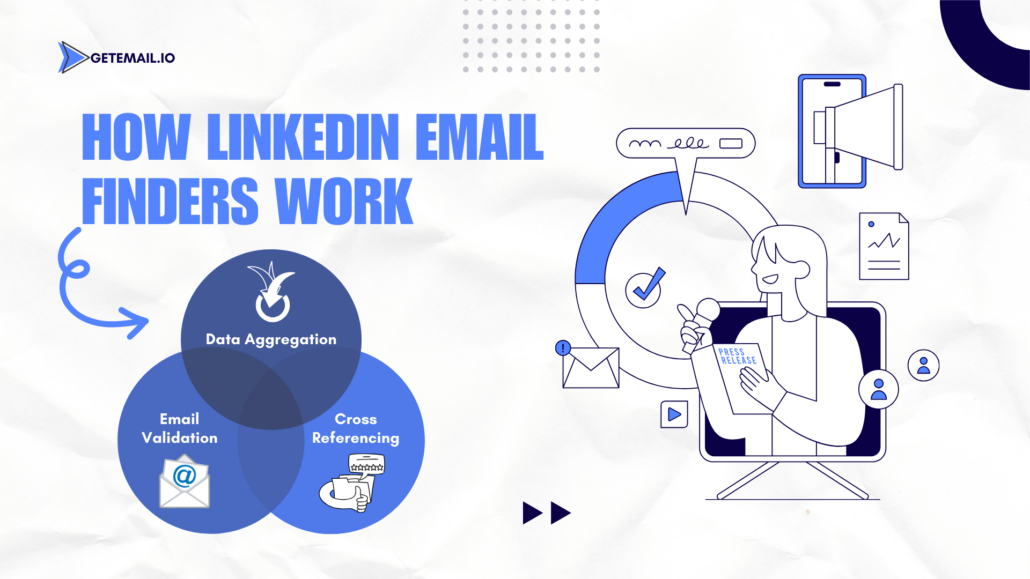
How LinkedIn Email Finders Work

LinkedIn email finders leverage a combination of algorithms, databases, and web scraping techniques to identify and verify email addresses linked to LinkedIn profiles. Here’s a simplified overview of how they work:

  1. Data Aggregation

Most email finder tools scrape publicly available data from various websites and platforms to create comprehensive databases of email addresses. Some may use LinkedIn’s API to extract contact information associated with profiles.

  1. Cross-Referencing

Once an email finder tool identifies a LinkedIn profile, it cross-references the individual’s information (such as name, job title, and company) with data from other sources to find their verified email address. These sources might include corporate websites, social media accounts, or publicly available data repositories.

  1. Email Validation

Many LinkedIn email finder tools come with built-in email validation features to ensure that the email addresses are valid. Hence, reducing the risk of bounces or spam flags.

Best LinkedIn Email Finder Tools in 2024

There are numerous email finder tools available in the market, each with its own set of features and capabilities. Here are some of the most popular LinkedIn email finders:

1. GetEmail.io

GetEmail.io comes with an extension to LinkedIn account where, once downloaded, you can access various aspects of lead generation and not just finding the valid email address. You also have a new feature to find leads from locality, industry as well as company.

You can also create lists to creatively separate leads into unique categories and extract them to google sheets without any hassle. Its user-friendly interface makes it easy for you to find emails. GetEmail.io also offers free credits for signing up– if you haven’t yet, why don’t you try it right away!

2. Hunter.io

Hunter is one of the most well-known email finder tools. It enables users to search for emails directly from LinkedIn or by entering a domain name. Hunter cross-checks and verifies email addresses, ensuring high deliverability rates.

3. Snov.io

Snov.io offers a browser extension that integrates with LinkedIn, allowing users to find email addresses in just a few clicks. The tool also provides a built-in email verification feature, ensuring that users only receive valid email addresses.

4. Lusha

Lusha is known for its simplicity and efficiency, providing verified contact details with a click. Several sales professionals choose this as it offers direct integration with popular CRM systems, making the outreach process seamless.

Best Practices for Using LinkedIn Email Finder Tools

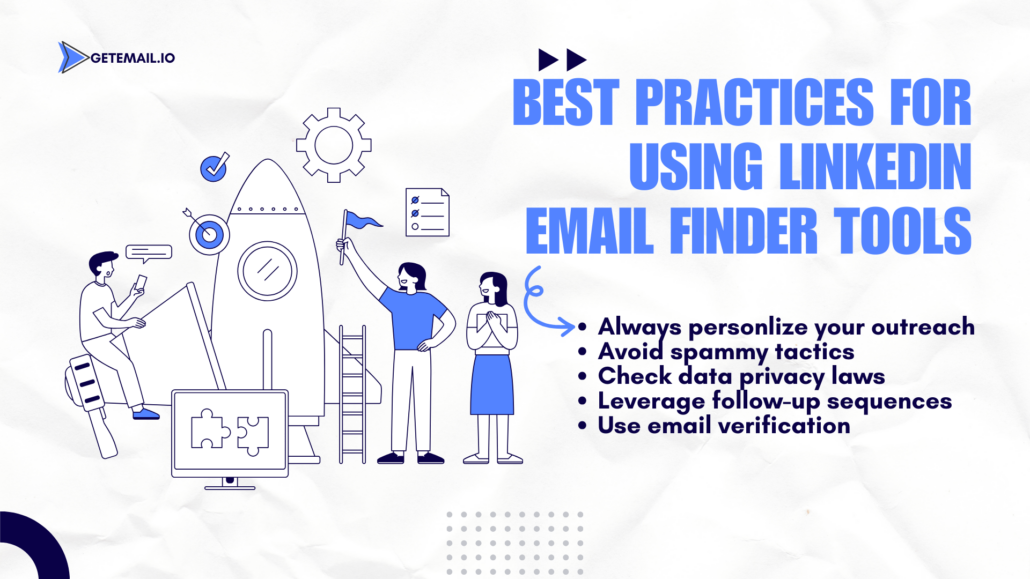
Best practices for using LinkedIn email finder tool

While LinkedIn email finders can enhance your professional networking, it’s essential to follow best practices to ensure you’re using these tools effectively and ethically.

  1. Always Personalize Your Outreach

Finding an email address is just the first step. You’ll need to personalize your outreach to make a meaningful connection. Try not to send generic or mass emails; instead, tailor your message based on the recipient’s profile, interests, or professional background.

  1. Avoid Spammy Tactics

Email finder tools should never be used to send unsolicited bulk emails. This can harm your reputation and damage relationships before they even start. Rather, focus on quality over quantity—reach out to individuals who are most relevant to your goals and personalize your messages.

  1. Check Local Data Privacy Laws

Emailing someone without their consent may violate data privacy laws, depending on the country or region you’re operating in. Familiarize yourself with regulations like the GDPR (General Data Protection Regulation) in Europe, CAN-SPAM in the U.S., and other local laws before using email finder tools.

  1. Leverage Follow-Up Sequences

Sending one email is often not enough to establish a connection. Follow-up emails can help remind the recipient of your initial message, provided they are respectful and not too frequent. A polite, well-timed follow-up can improve your chances of receiving a response.

  1. Use Email Verification

Always ensure the email addresses you extract are verified to avoid bounce rates or spam issues. Many email finder tools have built-in verification features, but if yours doesn’t, consider using a separate verification tool.

Ethical Considerations When Using LinkedIn Email Finder Tools

As powerful as these tools are, it’s essential that you use them ethically to respect the privacy of the professionals you’re reaching out to. Here are some important ethical considerations:

  1. Consent Matters

Ensure that you’re complying with all relevant data protection laws when using email finder tools. Just as mentioned previously, refer to the country rules and law before deciding on initiating an email communication.

  1. Avoid Misrepresentation

When reaching out to professionals via email, be transparent about who you are and your intentions. Misleading recipients or using their contact information for purposes other than what they expect is not only unethical but can also harm your credibility.

  1. Respect Professional Boundaries

While LinkedIn email finder tools make it easier to connect with people outside your immediate network, respect their boundaries. Don’t send multiple unsolicited emails or use aggressive sales tactics.

  1. Don’t Over-Rely on Automation

While LinkedIn email finders are great for streamlining the process, avoid becoming overly reliant on automation. Personal engagement is key to successful networking, and relying too heavily on automation can make your outreach feel impersonal.

Let’s conclude what we’ve discussed on LinkedIn Email Finder Tool

LinkedIn email finder tools have undoubtedly transformed professional networking, allowing for more direct and effective communication.

However, it’s important to use these tools responsibly, adhering to best practices and ethical guidelines to build meaningful, professional relationships.

We’re now in an interconnected digital sphere where networking has become increasingly important. LinkedIn email finder tools then become indispensable for everyone looking to expand their network for whatever the intention is – be it for securing new opportunities or bagging a new lead.

Better Your Email Sourcing by Targeting Right Decision-Makers

Why targeting decision-makers is important for email outreach

What does a successful salesperson, marketer and recruiter have in common? Their ability to reach out to the right people at the right time!

When networking, people usually think reaching out to everyone from an organization is safest move. However, it’s no more than throwing darts in the dark – even if you hit the bullseye one time, it might not work the next time.

One of the best ways to ensure your outreach lands in front of the most relevant individuals is through email sourcing by job title. And GetEmail.io is the just the right tool that helps you find right people using their job title.

In this blog, we’ll dive into the importance of email sourcing by job title and why targeting specific decision-makers within organizations can help improve your outreach strategies.

We’ll also explore the benefits, methods of sourcing, and ethical considerations that ultimately help you to connect with key stakeholders and decision makers.

The Importance of Targeting Decision-Makers in Email Sourcing

Email sourcing by job title is all about identifying and acquiring email addresses of professionals holding specific roles within a company.

The process ensures that your messages are read by the ones who are interested in your product, service or offer – and the power to take an action! Let’s learn other significances.

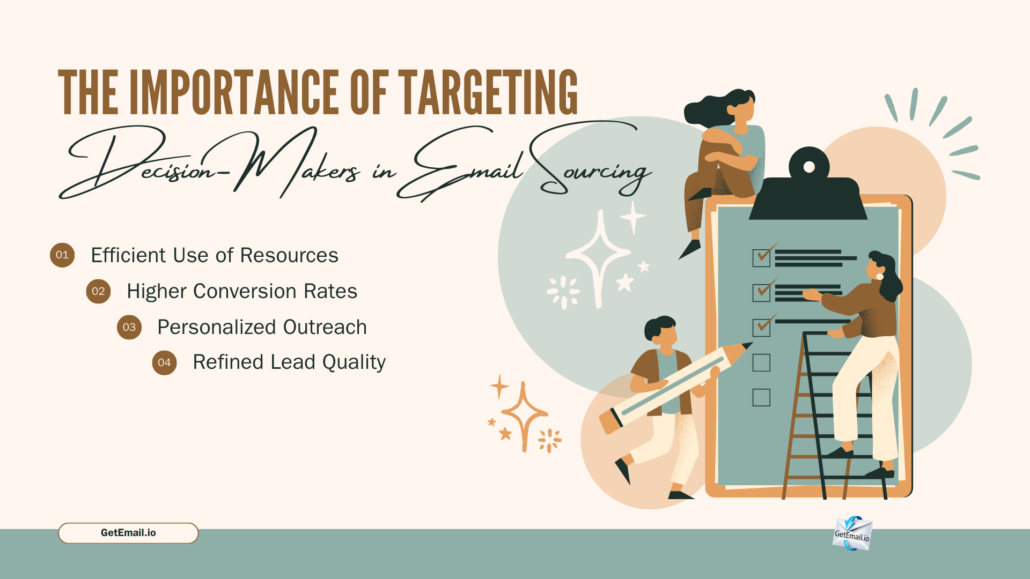
The Importance of Targeting Decision-Makers in Email Sourcing 1. Efficient Use of Resources 2. Higher Conversion Rates 3. Personalized Outreach 4. Refined Lead Quality

Email sourcing by job title is all about identifying and acquiring email addresses of professionals holding specific roles within a company.

The process ensures that your messages are read by the ones who are interested in your product, service or offer – and the power to take an action! Let’s learn other significances.

  1. Efficient Use of Resources

One of the main advantages of targeting specific job titles is efficiency. Every organization runs with a discipline with layers of different managements. So, when you identify and reach out to that one management head, you bypass all other individuals who do not have the authority or influence to move forward.

How does this benefit? You will definitely save tons of time, back-&-forth communication, and resources on irrelevant contacts. You also get to focus on the ones who can actually drive the outcome you’re seeking.

  1. Higher Conversion Rates

When your emails land in the inbox of someone with the power to make decisions, you significantly increase your chances of converting that lead into a customer or partner.

Decision-makers like department heads, C-level executives, and managers are often responsible for purchasing decisions, strategic partnerships, or hiring. When you reach out to them directly, your messaging is more likely to resonate and close the deal.

  1. Personalized Outreach

A study also reveals that highly personalized emails that include personalized messages and subject lines have an increase in reply rate up to 142%! Email sourcing by job title allows you to personalize your outreach in ways that are highly relevant to the recipient’s role.

Let’s take an example. A CFO may be interested in the financial benefits of your offering, while a CMO would be more concerned with how it enhances brand visibility. This specificity helps you create messaging that speaks directly to their pain points, increasing the likelihood of engagement.

  1. Refined Lead Quality

In email marketing, the quality of your leads is far more important than the quantity. By targeting specific job titles, you naturally improve the quality of your leads, focusing on individuals who are more likely to convert. Instead of chasing general contacts, you’re honing in on the people who have the budget, need, or authority to make a purchase decision.

Top Job Titles to Target When Email Sourcing

Now, depending on your industry, the job titles you prioritize for email sourcing will vary. However, in most business contexts, key decision-makers typically fall within specific categories.

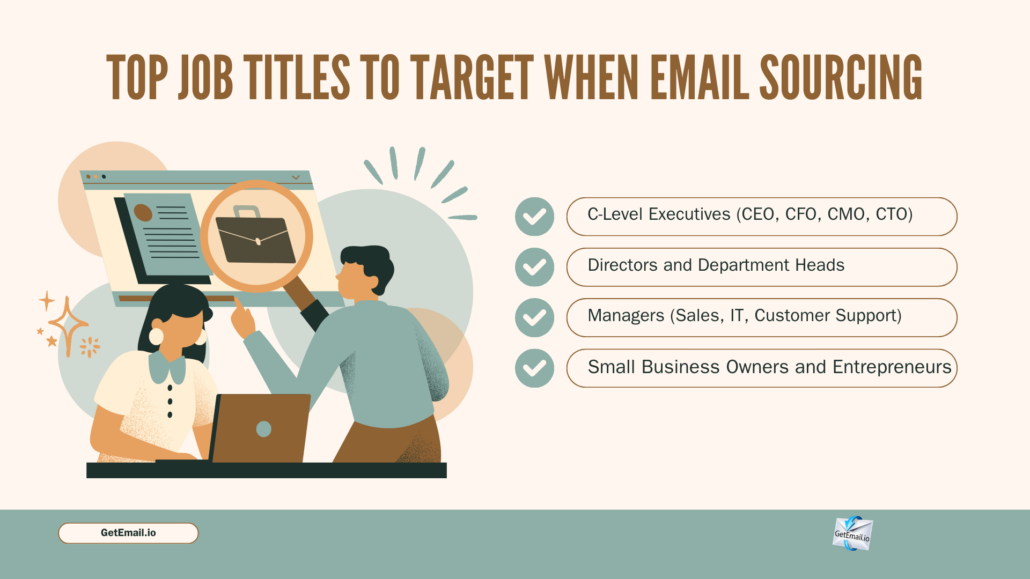
Top Job Titles to Target When Email Sourcing. 1. C-Level Executives (CEO, CFO, CMO, CTO) 2. Directors and Department Heads 3. Managers (Sales, IT, Product, Customer Support) 4. Small Business Owners and Entrepreneurs

Let’s explore some of the most common job titles to target based on the type of business or outreach:

  1. C-Level Executives (CEO, CFO, CMO, CTO)

C-level executives are the highest-ranking individuals in an organization and are responsible for overall business strategy, company-wide decisions, and major investments. While they are often difficult to reach, connecting with them can fast-track decisions, especially for strategic partnerships, major deals, or high-value products and services.

  • CEO (Chief Executive Officer): The CEO is responsible for the overall vision and direction of the company. Reaching out to CEOs can be beneficial if you’re offering directly impacts the entire organization or aligns with the company’s strategic goals.
  • CFO (Chief Financial Officer): The CFO focuses on the financial health of the company. For businesses offering financial tools, cost-saving solutions, or investment opportunities, the CFO is the ideal target.
  • CMO (Chief Marketing Officer): CMOs manage the company’s marketing efforts. If your product or service involves marketing, branding, advertising, or customer engagement, the CMO is likely to be interested.
  • CTO (Chief Technology Officer): For businesses in tech, software, or IT services, the CTO is the decision-maker responsible for overseeing technology investments.
  1. Directors and Department Heads

Directors and department heads are high-level managers who oversee specific areas of the business, such as marketing, operations, HR, or finance. While they may not have the same authority as C-level executives, they often have a considerable influence on purchasing decisions related to their departments.

  • Marketing Director: If your business offers digital marketing services, advertising solutions, or customer relationship management (CRM) tools, targeting a marketing director is key.
  • Operations Director: Operations directors are responsible for ensuring that the business runs smoothly and efficiently. They are ideal targets for companies offering operational software, planning solutions, or supply chain services.
  • HR Director: HR directors oversee recruitment, employee engagement, and talent management. For companies offering recruitment platforms, HR software, or benefits packages, reaching out to HR directors is essential.
  1. Managers (Sales, IT, Product, Customer Support)

Managers are often responsible for the day-to-day decisions in their departments and have a direct impact on operational functions. While they may not make high-level strategic decisions, they are often tasked with researching, evaluating, and recommending products or services.

  • Sales Manager: Sales managers are responsible for managing the sales team and improving sales performance. Businesses offering sales tools, CRM software, or training can target sales managers to pitch their solutions.
  • IT Manager: IT managers oversee the company’s technology infrastructure. If your offering involves cybersecurity, cloud computing, or software solutions, IT managers are the go-to contact.
  • Product Manager: Product managers focus on product development and delivery. For businesses offering tools related to product lifecycle management, customer feedback, or development platforms, reaching out to product managers is effective.
  1. Small Business Owners and Entrepreneurs

In smaller companies, business owners or entrepreneurs often serve as the main decision-makers. Unlike in large corporations, where decision-making is divided among different executives and managers, small business owners have the final say on all aspects of the business—from marketing to finance to operations. So, reaching out to them and initiating a conversation becomes much more of a simpler process.

Various Methods for Sourcing Emails by Job Title

The best part of email sourcing is that there is not one-size-fits-all approach. There are multiple methods that help you get the right contact information. Let’s look at some of the most effective ones.

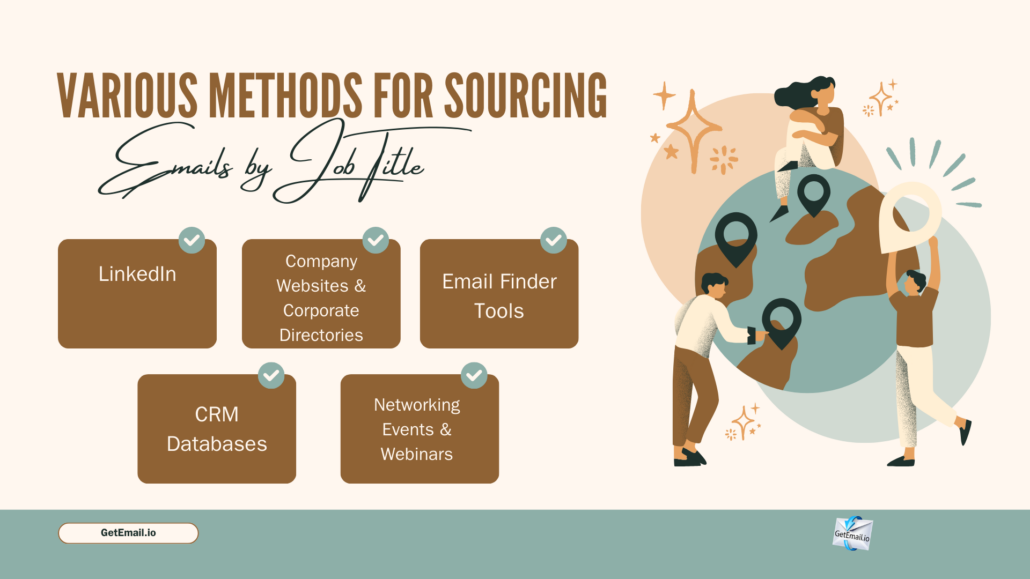
Various Methods for Sourcing Emails by Job Title 1. LinkedIn, 2. Company Websites and Corporate Directories 3. Email Finder Tools 4. CRM Databases 5. Networking Events and Webinars

1. LinkedIn

LinkedIn is a treasure trove of professional data, offering detailed information about individuals’ job titles, industries, companies, and more. Tools like GetEmail.io allow you to filter searches by job title, making it easy to find decision-makers at specific companies. Once you’ve identified the right contacts, it can also help extract email addresses.

Protip: GetEmail.io also has integration with Make.com and Zapier to make email sourcing easy for you. You can add multiple steps like searching to collecting, then sending emails, all at once. Check out the link here for more integrations!

2. Company Websites and Corporate Directories

Many companies list their executives, directors, or department heads on their websites, often with email addresses or contact forms. Corporate directories and “About Us” pages are valuable resources for finding key personnel and their contact information.

3. Email Finder Tools

Several email finder tools are designed specifically for sourcing emails based on job titles. Tools like ours GetEmail.io, Hunter.io and Snov.io allow users to search for emails by entering a job title or domain, delivering verified email addresses of the desired contacts. You can use our chrome extensions to connect to your Gmail as well as Salesforce accounts.

4. CRM Databases

Customer Relationship Management (CRM) platforms often come with built-in databases of leads and prospects, allowing you to filter by job title, industry, or company size. Tools like Salesforce, HubSpot, and Zoho offer search features for identifying the right contacts.

5. Networking Events and Webinars

In-person and virtual networking events often provide opportunities to connect with professionals in specific roles. Attend these industry-specific webinars, conferences, or workshops to engage with decision-makers directly. You can then follow up by sourcing their emails through professional directories or email finders.

Best Practices for Email Sourcing by Job Title

Now that you’ve sourced the email addresses of the right people, it’s now time to approach them strategically. It is more crucial than you expect it to be because a single email can either make your dreams come true or break it altogether. Here’s what you can do.

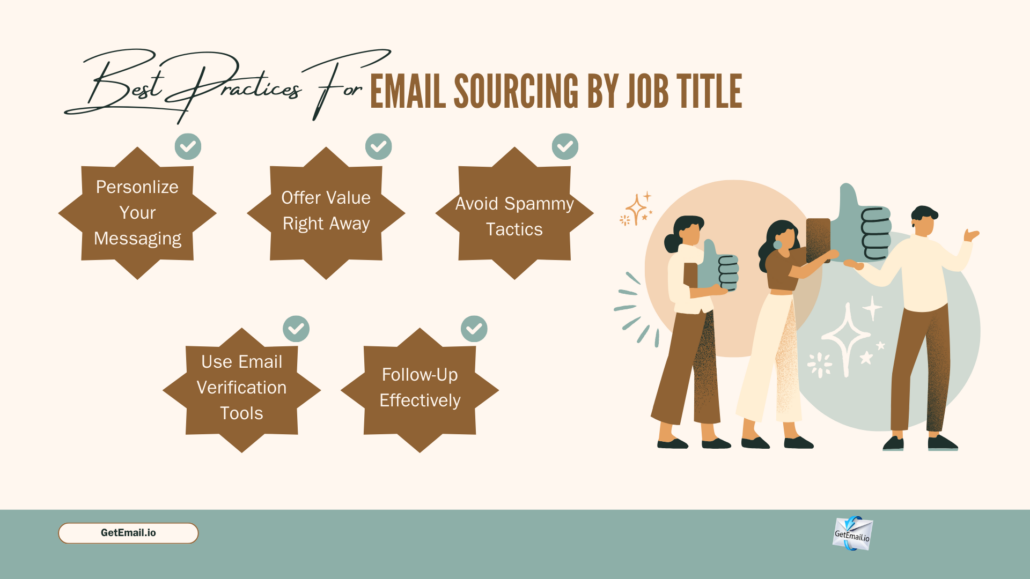
Best Practices for Email Sourcing by Job Title 1. Personalize Your Messaging 2. Offer Value Right Away 3. Avoid Spammy Tactics 4. Use Email Verification Tools 5. Follow-Up Effectively
  1. Personalize Your Messaging

The most important rule in email sourcing is to personalize your emails. Address the recipient by their name, mention their specific role, and tailor your message to their pain points or interests. Personalized emails are far more likely to be opened and acted upon than generic, one-size-fits-all outreach. Personalizing the subject line can help you improve your email open rate by 33%!

  1. Offer Value Right Away

When emailing decision-makers, focus on the value you can provide. Whether it’s solving a specific problem, increasing efficiency, or saving costs, make sure your value proposition is clear from the start. Busy professionals don’t have time to wade through long-winded messages—get to the point quickly!

  1. Avoid Spammy Tactics

Bombarding decision-makers with unsolicited emails or using overly aggressive sales tactics can harm your reputation. Instead of sending mass emails, focus on a targeted, thoughtful approach that emphasizes quality over quantity. Respect the recipient’s time and boundaries. In fact, a study confirms that bulk cold emails sent from the same email address improves reply rates by 93%.

  1. Use Email Verification Tools

Even if you’ve sourced emails using reliable tools, always verify them before sending. Invalid email addresses can lead to high bounce rates, damaging your email sender reputation. GetEmail.io along with many email finder tools offer built-in verification features that ensures the authenticity of the email addresses.

  1. Follow-Up Effectively

It’s common for decision-makers to miss your first email due to busy schedules. A polite and timely follow-up email can significantly improve your response rates. Be sure to remind the recipient of your initial message and reinforce the value you’re offering.

What Are the Ethical Considerations in Email Sourcing by Job Title

While targeting decision-makers is a highly effective strategy for outreach, it’s important to approach email sourcing with ethical practices to avoid harming your reputation or violating legal regulations. Here are key ethical considerations to keep in mind:

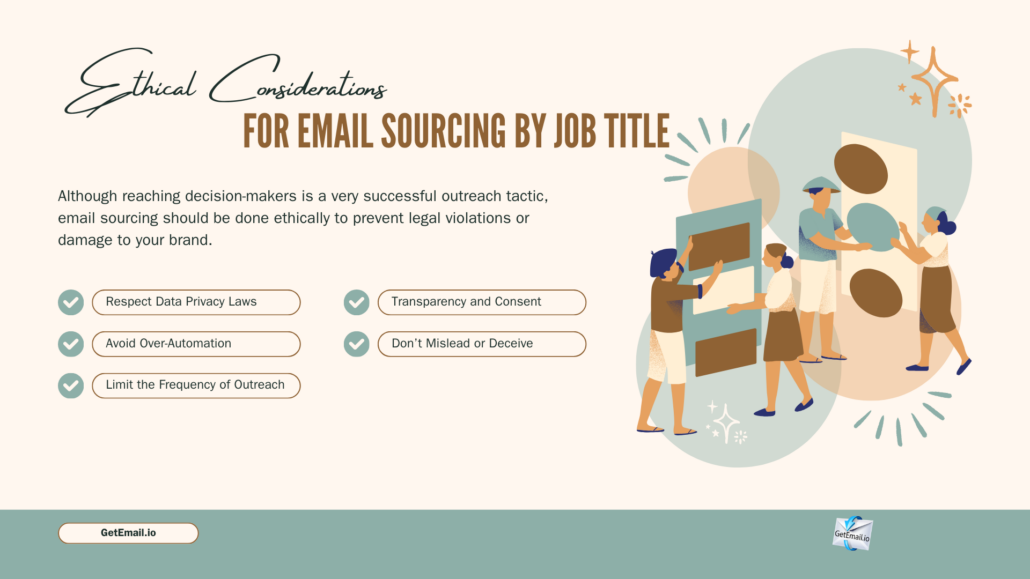
What Are The Ethical Considerations in Email Sourcing by Job Title 1. Respect Data Privacy Laws 2. Transparency and Consent 3. Avoid Over-Automation 4. Don’t Mislead or Deceive 5. Limit the Frequency of Outreach

1. Respect Data Privacy Laws

Email sourcing and prospecting must always comply with local and international data privacy regulations. Laws such as the General Data Protection Regulation (GDPR) in the EU and the CAN-SPAM Act in the U.S. set clear guidelines for email communication. Ensure you understand the legal requirements for obtaining and using someone’s email address for business outreach. Many of these laws require explicit consent from the recipient before you can send promotional emails, so always adhere to the regulations relevant to the region in which you’re operating.

2. Transparency and Consent

Being transparent about how you sourced someone’s email is essential. While email finder tools help you locate emails, it’s important not to abuse this access. Where possible, request consent or provide an option to opt out of future communications. Including a clear unsubscribe link in your emails ensures recipients can easily manage their preferences, which also keeps you in compliance with legal obligations.

3. Avoid Over-Automation

Although automation tools can help scale email campaigns, you shouldn’t overuse them to the point of losing the human touch. Over-automated campaigns can feel impersonal and intrusive, especially when targeting high-level professionals. Focus on quality interactions and make sure your outreach feels genuine and considerate of the recipient’s time and needs.

4. Don’t Mislead or Deceive

There’s a reason why “honesty is the best policy” is still relevant to this day. Misleading subject lines, fake referrals, or deceptive promises might capture a recipient’s attention temporarily, but they will damage your credibility in the long run. Build trust by providing clear, honest, and relevant information from the start.

5. Limit the Frequency of Outreach

Even if your message is personalized and valuable, sending too many emails can become overwhelming and push prospects away. Be mindful of how often you reach out to decision-makers. Following up is important, but overloading someone’s inbox can result in them marking your emails as spam, which negatively affects your sender reputation.

The Role of Email Personalization in Targeting Decision-Makers

Decision-makers are bombarded with countless emails daily, so you need to stand out by speaking directly to their unique needs and responsibilities. Here’s how personalization plays a crucial role in targeting the right individuals:

1. Address Their Role and Responsibilities

When reaching out to someone based on their job title, mention aspects of their role that relate to your product or service. For example, if you’re contacting a Chief Technology Officer (CTO), focus on how your solution can streamline their technology stack or improve operational efficiency. By acknowledging their responsibilities, you show that you’ve done your homework and that your message is relevant.

2. Tailor the Value Proposition

Your value proposition should align with the priorities of the recipient’s job title. For example, a CFO will care more about cost savings and return on investment (ROI), whereas a marketing director may focus on customer acquisition and brand visibility. By customizing your pitch to match the recipient’s priorities, you’re more likely to capture their interest.

3. Refer to Relevant Pain Points

Understanding the common pain points that decision-makers face in their roles lets you to position your solution as the answer. For instance, an HR director might struggle with employee retention or recruitment costs. If your product or service addresses these pain points, highlighting this in your email demonstrates that you’re in tune with their challenges and can offer a valuable solution.

4. Leverage Data and Case Studies

Decision-makers are typically data-driven, so backing up your claims with relevant data, statistics, or case studies adds credibility to your message. Highlighting real-world success stories, especially from companies similar to theirs, can build trust and make your outreach more persuasive.

Measuring Success With Key Metrics for Email Sourcing Campaigns

Assess the effectiveness of your email sourcing efforts by tracking key performance indicators (KPIs). Here are some of the most important metrics to monitor when targeting decision-makers via email:

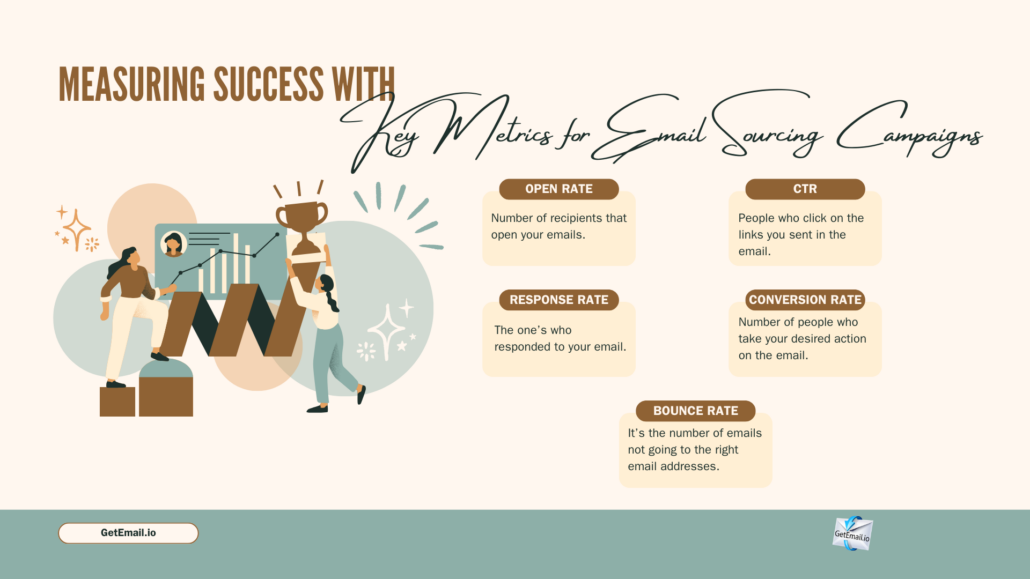
Measuring Success With Key Metrics for Email Sourcing Campaigns 1. Open rate 2. Click-through rate 3. Response rate 4. Conversion rate 5. Bounce rate

Assess the effectiveness of your email sourcing efforts by tracking key performance indicators (KPIs). Here are some of the most important metrics to monitor when targeting decision-makers via email:

1. Open Rate

The open rate measures how many recipients opened your email. A low open rate may indicate that your subject line isn’t compelling or that you’re targeting the wrong job titles. Experiment with different subject lines and adjust your targeting strategy based on these insights.

2. Click-Through Rate (CTR)

The click-through rate tracks the number of people who clicked on a link in your email. If your CTR is low, it may suggest that your message or value proposition isn’t resonating with the recipient, or that your call-to-action (CTA) isn’t clear or enticing enough.

3. Response Rate

The response rate measures how many people replied to your email. A high response rate indicates that your outreach is personalized and relevant to the decision-maker. If your response rate is low, you may need to refine your messaging or offer more value in your email.

4. Conversion Rate

Your conversion rate tracks how many of the decision-makers you reached out to take the desired action, whether that’s signing up for a demo, making a purchase, or scheduling a meeting. This is the most important metric, as it directly reflects the effectiveness of your email sourcing efforts.

5. Bounce Rate

A high bounce rate suggests that you’re sending emails to invalid or outdated addresses. Minimize bounces and always use email verification tools before launching your campaign to ensure that the email addresses you’ve sourced are valid. Learn how to reduce bounces and spam rates in the other detailed blog.

Rewinding All Things Discussed

Email sourcing by job title is an incredibly powerful strategy for reaching the right decision-makers within an organization. Focus your efforts on key individuals—such as C-level executives, directors, department heads, and managers— to ensure that your message lands in front of the people who have the authority to make purchasing decisions, approve projects, or form partnerships.

This targeted approach allows you to personalize your outreach, improve lead quality, and maximize conversion rates. However, you also need to adhere to the policies and laws to maintain compliance.

After all, refine your strategy at every interval to the finalize on the one that actually gives you desired results.