
Email List Hygiene in 2026—Why It Matters More Than Ever?

Email List Hygiene in 2026

Email continues to be one of the most dependable channels for growth, sales, and customer communication. Even as new platforms emerge, email remains unmatched in reach, ownership, and long-term value.

But heading into 2026, the success of email is being decided less by what is written and more by who is actually receiving those emails.

Email lists are no longer stable assets. They change constantly.

People move jobs more frequently, roles evolve, companies restructure, and inbox behavior shifts. In 2025, many teams invested heavily in better copy, smarter automation, and AI-driven personalization.

What received far less attention was whether the email list itself still reflected reality.

That gap is now impossible to ignore!!!

The Quiet Decline of Email Performance

The Quiet Decline of Email Performance

One of the reasons email list hygiene is so often underestimated is that its impact is gradual. Emails continue to be sent. Delivery rates look acceptable. Dashboards still show numbers moving. Yet engagement begins to feel unpredictable. Email open rates decline slowly. Replies become inconsistent. Campaigns that once worked start requiring more effort to deliver the same results.

Have you experienced this? If so, you’re not alone.

This usually is not caused by invalid email addresses. It is caused by outdated ones.

Many contacts on an email list are still technically valid, but the person behind the address has changed roles, changed priorities, or stopped actively checking that inbox. 

These contacts don’t bounce and don’t unsubscribe, so they remain quietly embedded in the list. Over time, they dilute engagement signals and weaken “sender reputation.”

Inbox providers notice this pattern long before teams do!

Why the Old Approach to Email List Hygiene Falls Short

Is Your Email List Still Relevant

Traditionally, email list hygiene focused on surface-level cleanup: removing hard bounces, processing unsubscribes and occasionally running verification checks. While these steps are still essential, they no longer address the core problem.

Modern inbox algorithms care deeply about engagement. They look at how recipients behave over time. Do people open consistently? Do they reply? Do they ignore messages week after week?

When a large portion of an email list is disengaged—even if those emails are technically valid—it signals low relevance. 

At that point, improving subject lines or sending more emails does little to help. The issue is not how the message is written, but whether it is being sent to the right people.

In 2026, email performance depends heavily on the quality and freshness of the email list itself. The more important question, then, is whether that list is still relevant.

Email Lists Are Living Systems Now

The most important shift heading into 2026 is understanding that your email list is not a static database. It is a living system that requires continuous care.

Contacts decay naturally. Relevance fades. Context changes. An email list that performed well earlier in the year may already be partially outdated a few months later. This is why high-performing teams are moving away from one-time cleanups and toward ongoing list health practices.

Instead of asking, “Is this email address valid?” the more important question becomes, “Is this email address still relevant?”

That shift changes everything—from segmentation and personalization to deliverability and trust.

A Practical Email List Hygiene Framework for 2026

Email List Hygiene Framework for 2026

Maintaining a healthy email list does not require complexity, but it does require consistency. A practical approach going into 2026 looks like this:

1. Source contacts intentionally
How contacts are added to the email list matters. Whether using inbound forms or an email finder tool to find email addresses, accuracy and context should come before volume.

2. Verify before outreach, not after problems appear
Email verification should happen as part of the workflow, especially before large campaigns, not as a reactive fix.

3. Monitor engagement decay
Long-term inactivity is a signal. If contacts consistently ignore emails, it’s time to reassess relevance, not increase volume.

4. Refresh contact data regularly
Roles, companies, and responsibilities change. Refreshing contact information helps ensure messages stay aligned with the current reality.

5. Remove or pause disengaged contacts thoughtfully
This isn’t about aggressive pruning. It’s about protecting engagement signals and sender reputation over time.

This kind of hygiene turns your email list from a passive asset into an active advantage.

Why Email List Hygiene Matters More in 2026?

Several trends make email list hygiene especially critical going forward.

Inbox algorithms are becoming faster and less forgiving when it comes to disengagement. Automation and AI have made it easier than ever to scale outreach, which means poor data can now cause damage at scale. 

At the same time, recipients have grown more selective, engaging only with emails that feel timely and relevant.

In this environment, outdated or poorly maintained lists do more than underperform. They actively undermine “sender reputation” and trust. 

Maintaining list health is no longer optional background work. It is central to protecting deliverability, engagement, and long-term effectiveness.

Final Thoughts

Email will continue to work in 2026, but only for teams that respect the foundation it relies on.

Strong campaigns don’t begin with clever copy or sophisticated automation. They begin with a healthy email list—one built on accurate data, maintained consistently, and aligned with real people, not outdated records.

This is also where the ability to reliably find email addresses, verify them, and keep contact data fresh becomes part of a long-term strategy rather than a tactical step. When email lists are treated as living systems and supported by the right tools and processes, email stops feeling fragile and starts feeling dependable again.

For teams serious about email performance in 2026, list hygiene isn’t a background task. It’s the quiet advantage that makes everything else work.
Why You Need an Email Verifier Tool & How to Choose One

Why your email marketing needs an email verifier tool

Can we be really honest for a hot second here? Email marketing can feel like shouting in the void sometimes. You craft the perfect campaign, hit send and then…crickets.

Your open rates are terrible, your bounce rates is through the roof and you’re pretty sure half your subscriber list doesn’t even exist anymore.

Sounds relevant?

Here’s the thing: the problem might not be your content or timing. It could be the email list itself. And that’s exactly where an email verifier tool comes in to save the day.

What exactly is an email verifier tool?

Simply put, email verifier tool is like a bodyguard to your personal email list. It’s a software that checks whether email addresses in your database are valid, active and safe to send messages to.

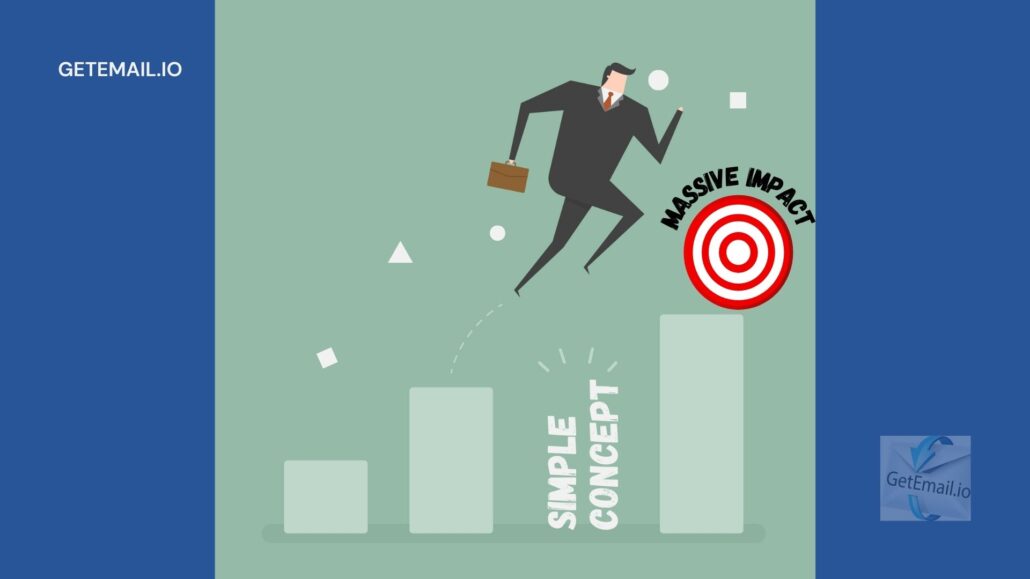
Simple concept, maximum impact. This works really well for email verification.

When your upload your email list to a verification tool like ours, it runs through each address and checks multiple factors like:

  • Is the format correct?
  • Does the domain exist?
  • Is the mailbox even active?
  • Is it a known spam trap?

Afte clearing all these checkboxes (and more! tbh), GetEmail.io gives you clean, verified list of addresses that are actually worth sending to.

Why email verification matters more than you think!

You might be wondering, “Do I really need another tool in my marketing stack?” Let me break down why email verification isn’t just nice to have – it’s essential for anyone serious about email marketing.

Your sender reputation is on the line

Email service providers (ESPs) like Gmail, Outlook, and Yahoo are watching you. Every time you send an email that bounces or gets spammed, your sender reputation takes a hit.

A drop in reputation and you email starts landing in spam folders or don’t get delivered at all. Even to people who actually want to hear from you. An email verifier tool keeps your bounce rates low and reputation high, ensuring every message actually reaches inbox.

Stop wasting money on ghost subscribers

Most email marketing platforms charge based on the number of subscribers in your list.

If you’re paying for 10,000 subscribers but 2,000 of them are invalid addresses, you’re literally throwing money away every single month.

Email verification helps you trim the excess from your list, so you’re only paying for real, reachable contacts.

Boost your actual engagement metrics

Here’s some truth not everybody knows: your email metrics are lying to you if your list is full of dead addresses.

When you remove invalid emails, your open rates, click-through rates and conversion rates all improve – not because your open content suddenly got better, but you’re finally measuring engagement from real people.

better metrics = better results which

How does email verification actually work?

Here’s what goes on behind the scenes when you use a tools like GetEmail.io:

Step 1: Syntax Check

First, the tools checks if the email address follows proper formatting rules. Is there an “@” symbol? Is there a period in the domain? Does it have weird characters that aren’t allowed? This catches obvious typos like “john@gmailcom” or “sarah@@company.com.”

Step 2: Domain Verification

Next, it verifies that the domain (the part after the “@”) actually exists and has valid DNS records. If someone typed john@gmial.com instead of “gmail.com”, this step catches it. The tool also checks if the domain has a valid MX (Mail exchange) record, which is necessary for receiving emails.

Step 3: Mailbox Validation

This is where it gets sophisticated. The tool communicates with the mail server to verify that the specific mailbox and can receive messages – all without actually sending email. It’s like knocking on the door to see if anyone’s home without actually walking inside.

Step 4: Risk assessment

Advanced email verifiers also check for risky addresses like known spam traps, disposable email addresses (think of that temp 10-minute email services), role-based emails (like info@ or support@), and address with a history of complaints. GetEmail.io’s algorithm flags these so you can deicide whether to keep them or remove them.

Key features to look for in an email verifier tool

Not all email verification tools are created equal. When you’re evaluating options (or wondering why GetEmail.io should be your go-to choice), here are the features that actually matter:

Bulk verification capabilities

If you’re serious about email marketing, you need to verify thousands of addresses at once. Look for a tool that can handle bulk uploads via .CSV files and process them quickly. GetEmail.io can verify lists in minutes, not hours, so you’re not stuck waiting around when you need to send a time-sensitive campaign.

Real-Time API access

For businesses with signup forms, landing pages, or e-commerce checkouts, real-time verification is a game-changer. An API integration lets you verify email addresses at the point of entry, preventing bad data from ever entering your system in the first place.

High accuracy rates

This one’s non-negotiable. If your verification tool is only 75% accurate, you’re still dealing with a ton of bounces and wasted sends. Look for tools that boast accuracy rates of 95% or higher. GetEmail.io uses advanced algorithms and multiple verification layers to ensure you’re getting most accurate results possible.

Data security and privacy

You’re uploading your entire database in this tool. Make sure it takes security seriously with encryption, compliance certifications (like GDPR), and clear privacy policies. Your customers’ data should be protected like fort Knox.

Reasonable pricing

Email verification should be cost-effective, not another budget-killer. Look for transparent pricing based on the number of verifications, with no hidden fees or surprise charges. Getemail.io offers competitive pricing that scales with your needs, whether you’re a startup or an enterprise.

Common email list problems that verification solves

Let’s talk about the real-world problems you’re probably facing right now and how email verification addresses them.

Common email list problems that email verification solves

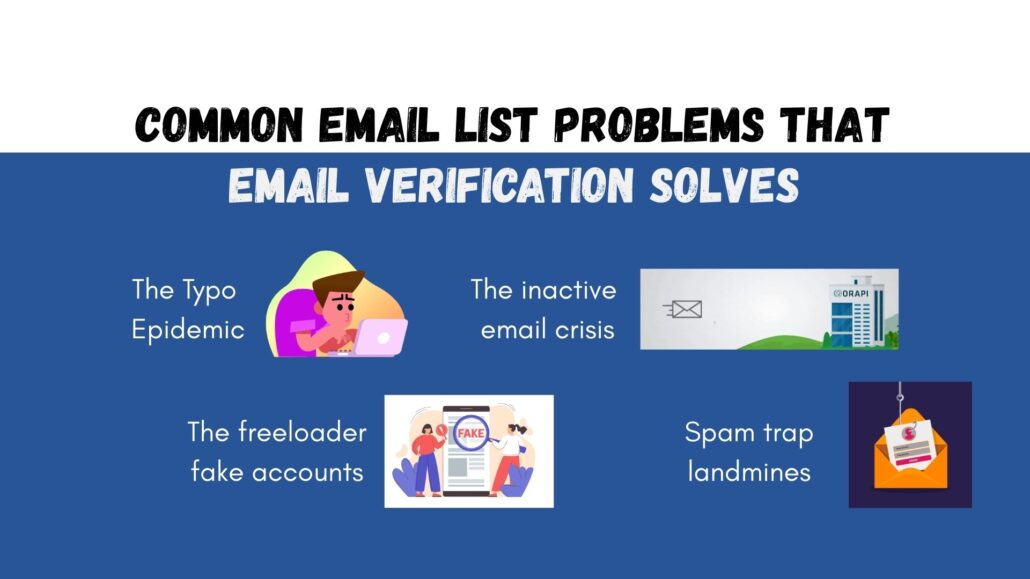
The typo epidemic

People make mistakes when typing their email addresses. It’s human nature. Someone rushing through your signup form types sarah@gmai.com instead of “gmail.com,” and boom – you’ve got an invalid address. Email verification catches these typos before they cause problems, and some tools even suggest corrections.

The inactive email crisis

People abandon email addresses all the time. They change jobs, switch providers, or just stop checking old accounts. Over time, your list fills up with these inactive emails that used to work but don’t anymore. Regular verification helps you identify and remove these dead addresses before they tank your deliverability.

Spam trap landmines

Spam traps are email addresses specifically created to catch spammers. They look like legitimate addresses, but they’re actually maintained by ISPs and anti-spam organizations. If you send emails to spam traps, your sender reputation gets destroyed. Email verification tools identify and flag these addresses so you can avoid them.

The freeloader fake accounts

Ever had someone signup for your lead magnet with a fake email just to download your content? Of course you have! Temporary email services and disposable addresses are everywhere. Verification tools spot these and let you decide whether to accept them or require a valid email for access.

How to use GetEmail.io for maximum impact

Now that you understand why email verification matters, let’s talk about how to actually use a tool like GetEmail.io to clean up your email marketing act.

Start with a complete list audit

If you’ve been doing email marketing for a while without verification, your first step should be a comprehensive audit. Upload your entire list to GetEmail.io and let it work its magic. You’ll probably be surprised (and maybe a little horrified) by how many invalid addresses you’ve been carrying around.

Don’t panic when you see the results. Most businesses lose 10-30% of their list in the first verification. That’s normal, and it’s a good thing – you’re cutting dead weight that was dragging down your performance.

Set up real-time verification

Once your existing list is clean, prevent future problems by implementing real-time verification on all your signup forms. GetEmail.io’s API integration makes this easy. When someone tries to signup with an invalid email, they’ll get an error message asking them to correct it. Problem solved before it starts.

Create a regular verification schedule

Email addresses decay over time. Studies show that about 22-25% of email addresses become invalid every year. Set a reminder to verify your list every 3-6 months to finish it fresh.

Segment based on verification results

Not all email addresses are created equal. Use your verification results to create segments. You might have one segment for your pristine, high-quality addresses and another for “risky” addresses that you want to send less frequently or monitor more carefully. This strategic approach maximizes deliverability while giving questionable addresses a chance to prove themselves.

Monitor your metrics

After verification, watch your email metrics closely. You should see improvements in deliverability, open rates and click-through rates. These improvements validate your verification efforts and help you calculate the ROI of the tool.

The real ROI of email verification

Let’s get down to brass tacks: What’s the actual return on investment for using an email verifier tool?

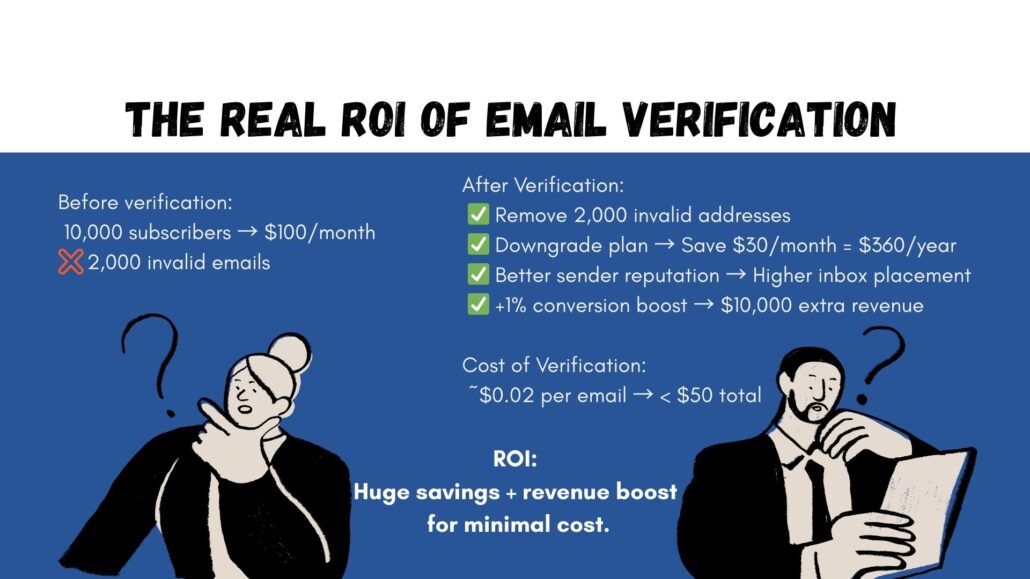
The real ROI of email verification is the calculation of budget leakage. The difference between how much you lose the amount when there's no verified email list vs when there a verified email list. This is to showcase how an email verification tool can improve the email list - thus, enhancing the productivity.

Consider this scenario:

You have an email list of 10,000 subscribers and you’re paying $100 per month for your email marketing platform. After verification, you discover that 2,000 addresses are invalid.

By removing them, you might be able to downgrade to a cheaper plan that saves you $30 per month – that’s $360 per year.

But the savings don’t stop there. You’re also improving your sender reputation, which means better inbox placement. If that improvement increases your conversion rate by just 1% and your average customer value is $100, you’ve just gained an extra $10,000 in revenue from a single campaign.

That cost of email verification? Usually just a few cents per email address, often less than $50 to verify your entire list. This math isn’t complicated – verification pays for itself many times over.

Making the decision: Is Email Verification Worth It?

If you’re still on the fence about whether you need an email verifier tool, ask yourself these questions:

  • Are your email bounce rates higher than 2%?
  • Have you noticed declining open rates over time?
  • Are you paying for email contacts that never engage?
  • Do you collect email addresses from web forms or landing pages?
  • Has it been more than 6 months since you cleaned your list?

If you answered yest to any of these questions, email verification isn’t just worth it – it’s overdue!

Getting started with GetEmail.io

Ready to clear your email list and start seeing better results from your campaign? GetEmail.io makes it easy to get started. The platform is intuitive enough for beginners but powerful enough for enterprise teams managing millions of contacts.

Whether you’re a solopreneur with a few hundred subscribers or a marketing team managing massive databases, email verification is one of the highest-leverage activities you can do. The time investment is minimal; the cost is low and the benefits compound over time.

Your email list is one of your most valuable marketing assets. Treat it with care it deserves, and it’ll pay dividends for years to come. Start verifying today and watch your email marketing performance transform from frustrating to phenomenal.

Remember: every email address in your database represents a real person (or at least, it should). By using an email verifier tool like GetEmail.io, you’re not just improving your metrics – you’re building a foundation for genuine, valuable communication with your audience. And that’s what email marketing is really all about.

How to Leverage Email Finder Tool for Targeted Marketing Campaigns

Using email finder tools for targeted marketing campaigns

Whether you’re into social media, on-page or off-page, every marketer is chasing for one thing – relevance!

No one, these days, wants to see a generic email with “dear user” subject line in their inbox. However, personalization doesn’t just benefit the marketing team, it helps sales team too.

A McKinsey report mentions about how personalization drive 10 – 15% revenue lift, even going up to 25% depending on your sector. Now that’s some numbers talking!

How do you build the most efficient personalized email campaign? If hyper-targeted outreach is your answer, then you’re on the right track. That’s a brilliant plan, to be honest.

Now, where should you start from? You’ve got the planning going. You’ve narrowed down whom to reach out to first and planning the KPIs around it. But do you have the right means to connect to them effectively?

Email finder tools is your answer. It makes sure that your outreach reaches out to the right people.

You might be already aware of the email finder tool and the basics of it. Today, let’s break down about what exactly they do and how can they fuel your marketing campaigns.

What Is Email Finder Software (And Why Does it Matter)?

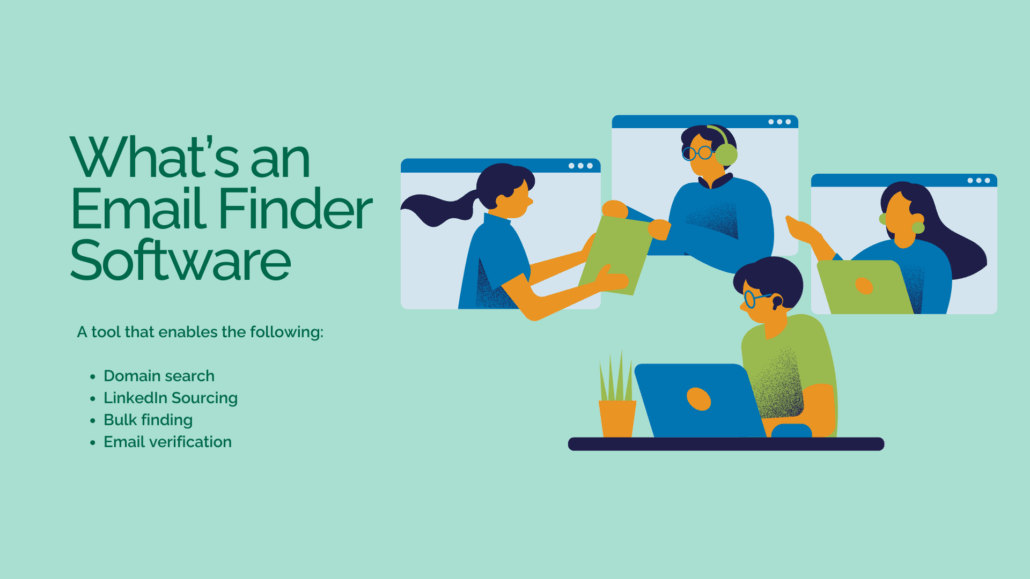
what is an email finder software? It is a tool that enables the following: Domain search LinkedIn Sourcing Bulk finding Email verification

Imagine having a magic tool that pulls verified email addresses from LinkedIn, websites, or even entire company domains. That’s email finder software in a nutshell.

Instead of spending hours hunting down contacts manually, you use a tool that automates the process. It is faster, smarter and way more scalable.

Most tools offer:

  • Domain search: Find emails under a specific domain (e.g., @companyname.com)
  • LinkedIn sourcing: Pull contacts directly from profiles
  • Email verification: Ensure the email is active and won’t bounce
  • Bulk finding: Upload a list and get all the emails at once

How does it matter, you ask? When you send a personalized email to the right person, it increases open rates and even better, it improves your conversions.

In short, an email finder tool boosts your lead generation strategy.

The Real-World Benefits of Targeted Email Marketing

Before diving into the technicalities, let’s zoom out and see the bigger picture.

When you run a targeted email marketing campaign, you’re reaching out to people who are actually interested in what you have to say or sell. You’re not throwing darts in the dark, you’re aiming with precision.

Here’s what you can expect:

  • Higher open and click-through rates: Relevance drives attention. When people feel like an email speaks directly to their needs, they respond.
  • Lower unsubscribe and spam rates: Nobody wants to be spammed. Targeted campaigns are less intrusive and more value-driven.
  • Better ROI: Email marketing already has one of the highest ROI of all digital channels, targeted efforts amplify that. Remember the statistics that says $1 investment = $36 Returns?
  • Increased personalization: When you know your audience, you can personalize beyond just “Hi {FirstName}.”

With email finder tool like GetEmail.io, it’s not just a name and email, you’re opening a door for intelligent segmentation and personalization.

We don’t just find you the emails, we verify and validate them to ensure your email campaign success.

Getemail.io is also flexible enough to integrate into any of your applications. Check out our features page to learn more about our offerings.

How Email Finder Software Helps You Build Better Contact Lists

Building a clean, segmented list is the backbone of successful outreach. Purchased email lists? That’s old news. Today’s high-performing marketers are leaning on intent-based outreach.

Here’s how email finder software helps:

  • Find decision-makers: Most tools allow you to filter by job title, department, or seniority level.
  • Industry targeting: Want to reach product managers in SaaS companies? Done.
  • Geographic filters: Focus your campaigns on specific countries, states, or cities.
  • CRM integration: Sync your email list directly to tools like ours, HubSpot, Salesforce, etc.

What results is that you get a focused list of verified leads that are not just relevant to your target audience but they’re more likely to respond as well. This is what happens when you’re reaching out with purpose.

Pro tip: Always verify your emails before hitting “send.” Email deliverability tools often come built-in with finder software to help reduce bounce rates.

Use Cases: Where Email Finder Tools Truly Shine

Use cases of email finder software

Let’s move beyond the basics and dive into practical, high-impact use cases where email finder tools prove invaluable. These tools aren’t just helpful, they change the dynamics across multiple industries.

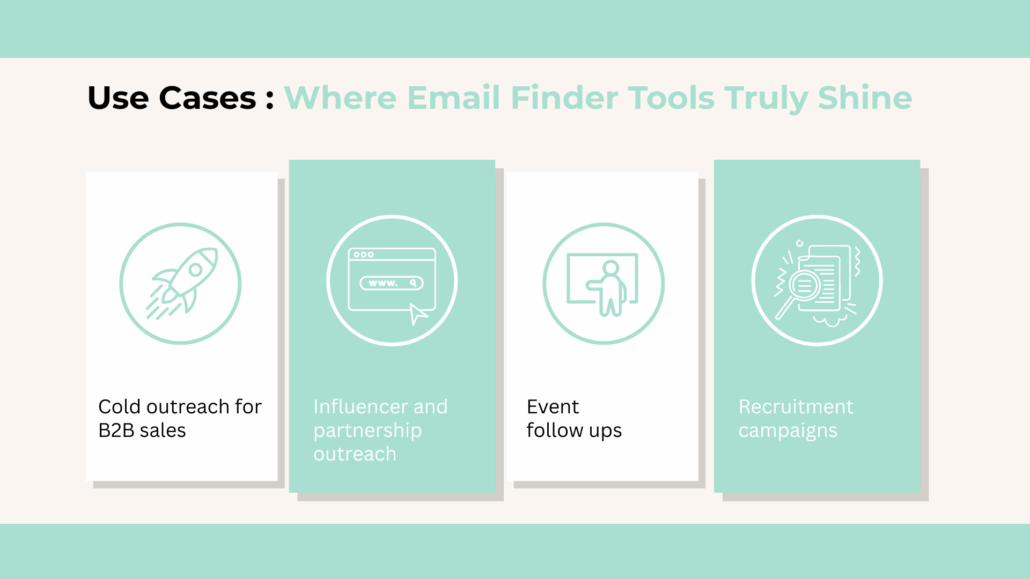
  1. Cold Outreach for B2B Sales

When your goal is to get your product or service in front of decision-makers, accurate contact data is everything.

  • Imagine selling a SaaS tool designed for HR teams.
  • Using tools like GetEmail.io or Snov.io, you can quickly build a list of HR heads at 500+ mid-size companies in your region.
  • These platforms offer verified email addresses, drastically reducing bounce rates and improving deliverability.
  • More quality leads = higher engagement and conversion.
  1. Influencer and Partnership Outreach

Finding the right collaborators is only half the battle and reaching them is the other.

  • Email finder tools help you get in touch with niche influencers, blog editors, or podcast hosts, even if their email isn’t publicly listed.
  • This opens doors to brand collaborations, guest posts, and affiliate partnerships.
  1. Event Follow-Ups

Post-event engagement can drive serious ROI, when it’s done right.

  • Attended a webinar, trade show, or industry meet-up?
  • Instead of sending a generic LinkedIn message, use an email finder to send a personalized follow-up directly to their inbox.
  • It’s more professional, and it helps you stand out.
  1. Recruitment Campaigns

Finding top talent can be challenging, especially when it comes to passive candidates.

  • Email finder tools allow recruiters to source personal or work email addresses of potential hires from platforms like LinkedIn.
  • This direct approach increases response rates compared to InMail alone.

From SaaS and EdTech to real estate and staffing agencies, email finder tools empower teams to connect with the right people, at the right time, in the right way.

Features to Look for in an Email Finder Tool

There’s no shortage of tools out there. Every platform comes with its own advantages and disadvantages, the point is, which one are you willing to take a chance on.

To ensure you’re investing wisely, focus on these essential features:

  1. Accuracy and Deliverability
  • The primary goal of any email finder is to help you reach real people.
  • Choose a tool that offers verified emails and minimizes bounce rates.
  • Look for features like confidence scores or real-time validation.
  1. Scalability and Bulk Search
  • Manual, one-by-one lookups are fine for small campaigns.
  • But if you’re scaling outreach, a tool with bulk email search capabilities will save hours of manual effort.
  • Some tools even let you upload CSVs or scrape emails from LinkedIn profiles at scale.
  1. Ease of Use and Integrations
  • Does the tool have a Chrome extension for on-the-go searches?
  • Can it plug directly into your CRM or email automation tools?
  • The smoother the integration, the easier it is to streamline your outreach.
  1. Credit System and Pricing Model
  • Most tools work on a credit-based pricing model.
  • Check how many verified emails you get per credit and whether the tool charges for unverified results.
  • Choose a plan that balances affordability with quality.
  1. Compliance and Data Security
  • To avoid legal risks, ensure your tool is GDPR and CAN-SPAM compliant.
  • Bonus if they offer features like opt-out management or custom unsubscribe links.

For long-term success, prioritize tools that also offer data enrichment, automated workflows, and team collaboration features. A reliable email finder tool is a long-term growth partner.

Best Practices for Running Targeted Campaigns with Email Finder Software

Now that you have your list, it’s time to make your campaign count. Even the best tools won’t help if your messaging falls flat.

Here are some quick dos and don’ts:

Do's and don'ts of using email finder software for targeted marketing campaigns

Do:

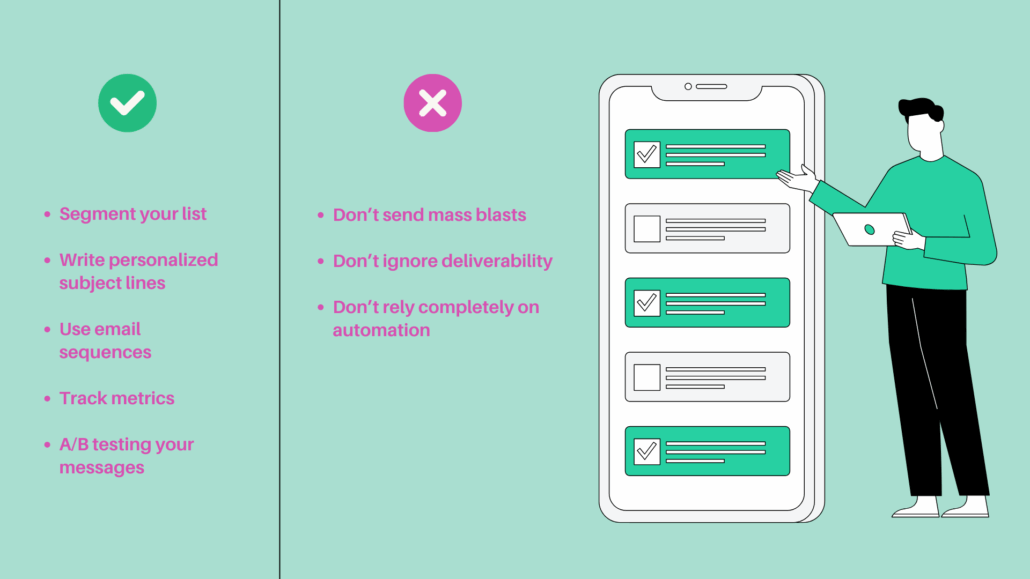
  • Segment your list: Break it down by job title, location, or industry to personalize your outreach.
  • Write personalized subject lines: “Quick question about your hiring process” beats “Let’s connect” every time.
  • Use email sequences: Follow-ups increase your chances. Don’t stop at one email.
  • Track metrics: Monitor open, click, and reply rates to tweak and improve.
  • A/B test your messages: Test different angles to see what resonates most.

Don’t:

  • Don’t send mass blasts to thousands of unsegmented leads.
  • Don’t ignore deliverability, too many bounces can hurt your sender reputation.
  • Don’t rely solely on automation. People can spot a generic template from a mile away.

Bonus tip: Pair your outreach with LinkedIn activity. Comment on their posts or send a soft touch message before emailing. It warms up your lead and increases the chance of a reply.

Make Every Email Count

72% of the consumers say they now engage with marketing messages that are tailored to their interests. Hence, executing marketing campaigns that piques customer’s interest becomes inevitable.

Email finder tool isn’t just a growth hack, it’s a strategic investment. It takes the guesswork out of prospecting and gives you the data you need to build meaningful, results-driven connections.

In the age of personalization and micro-targeting, sending the right message to the right person at the right time becomes a necessity.

So, whether you’re launching your next big campaign, prospecting for leads, or nurturing long-term clients, make every email count. Because with email finder tool, your next opportunity is just one verified address away.